These pictures show Network Rail’s progress with upgrading the railway line between Leeds and Manchester. The project aims to create more capacity for longer trains that can deliver quicker journeys.
Network Rail expects the project to be finished by the end of the decade. For more information, try visiting https://thetrupgrade.co.uk
For earlier pictures of progress around Dewsbury and Batley, try: https://philiphaigh.co.uk/2026/06/improvements-at-dewsbury-and-batley-railway-stations-in-west-yorkshire/
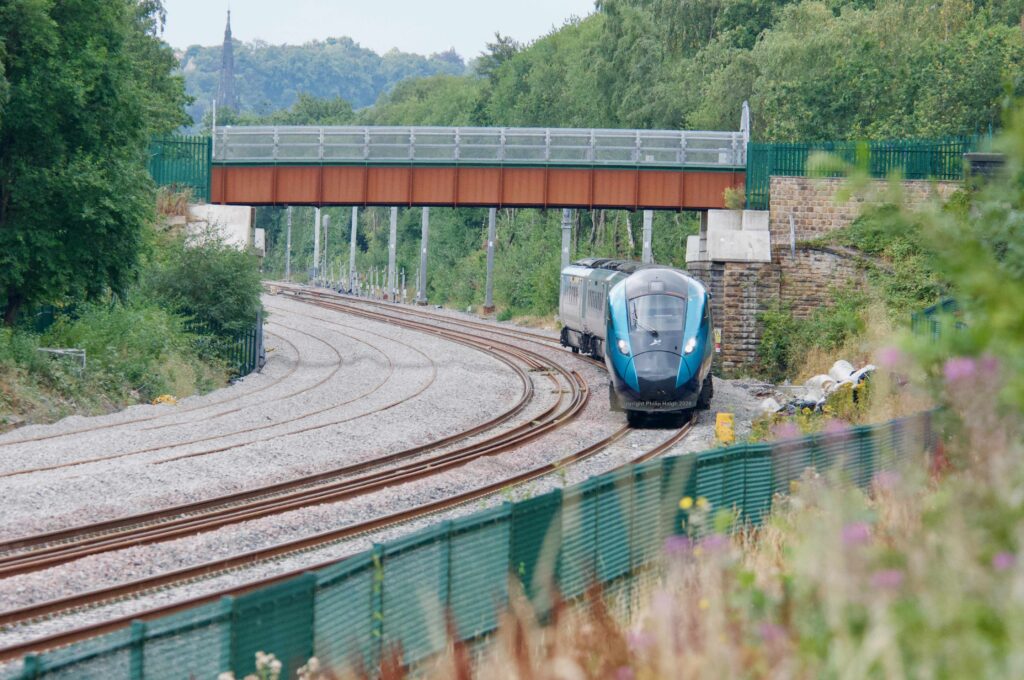
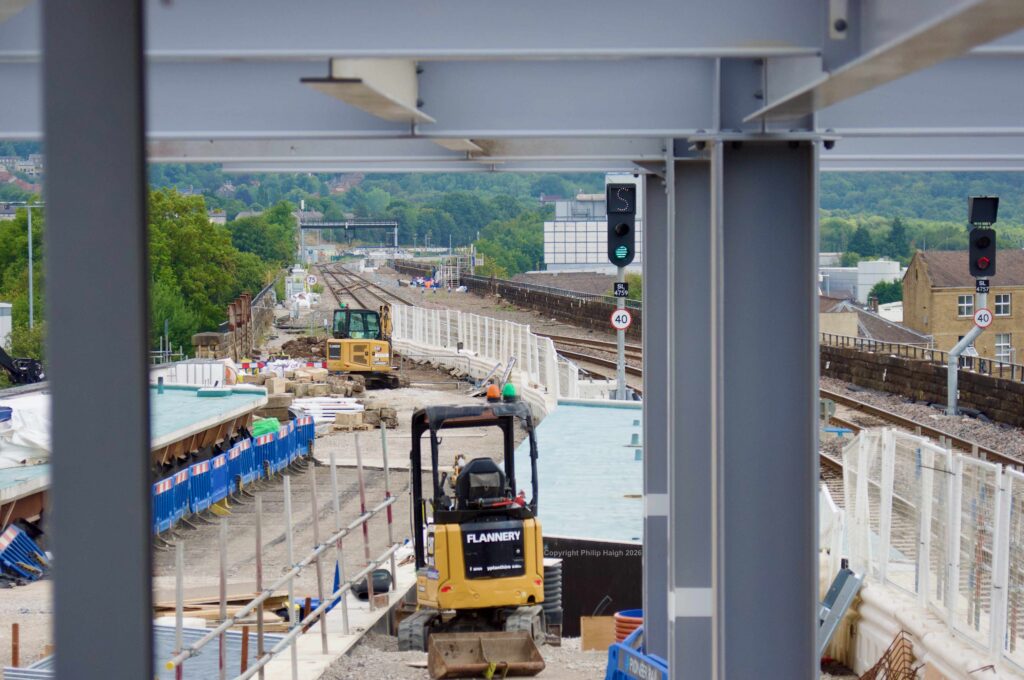
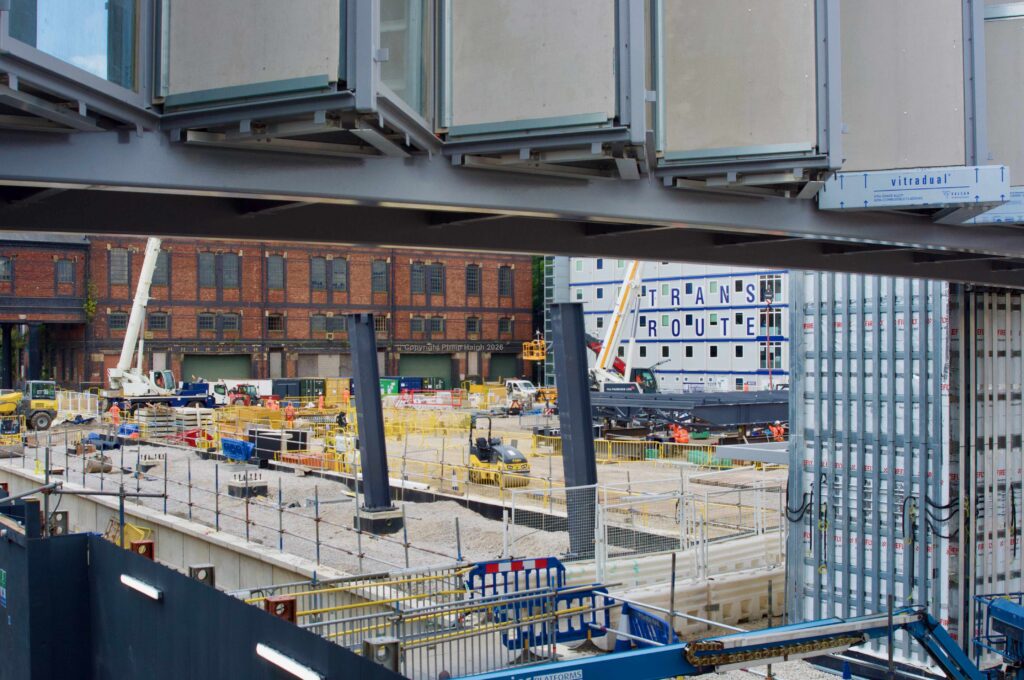
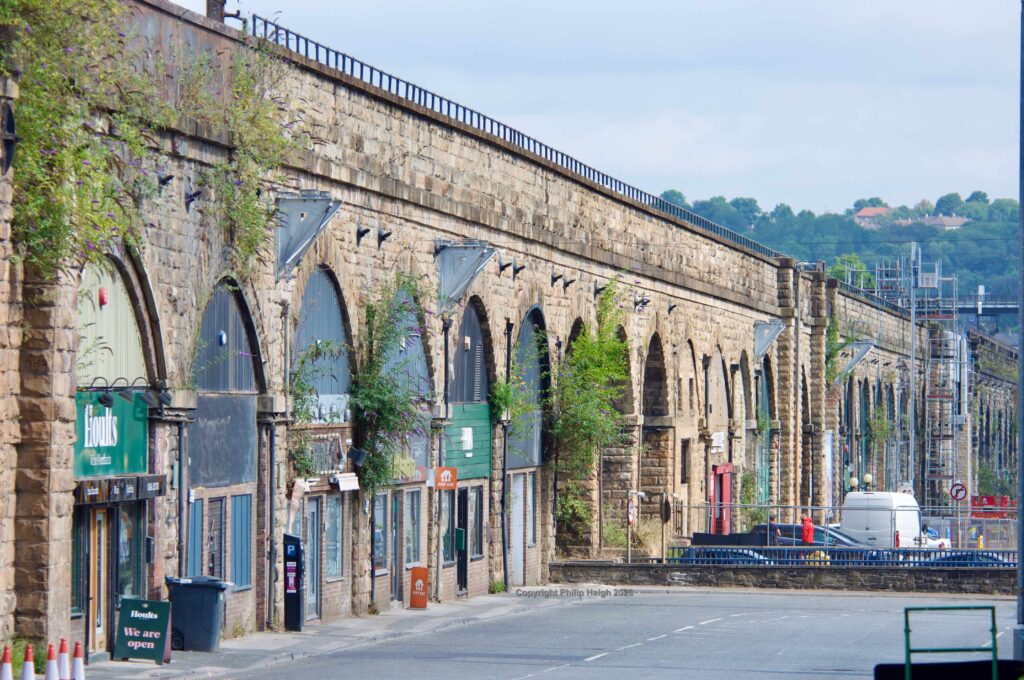
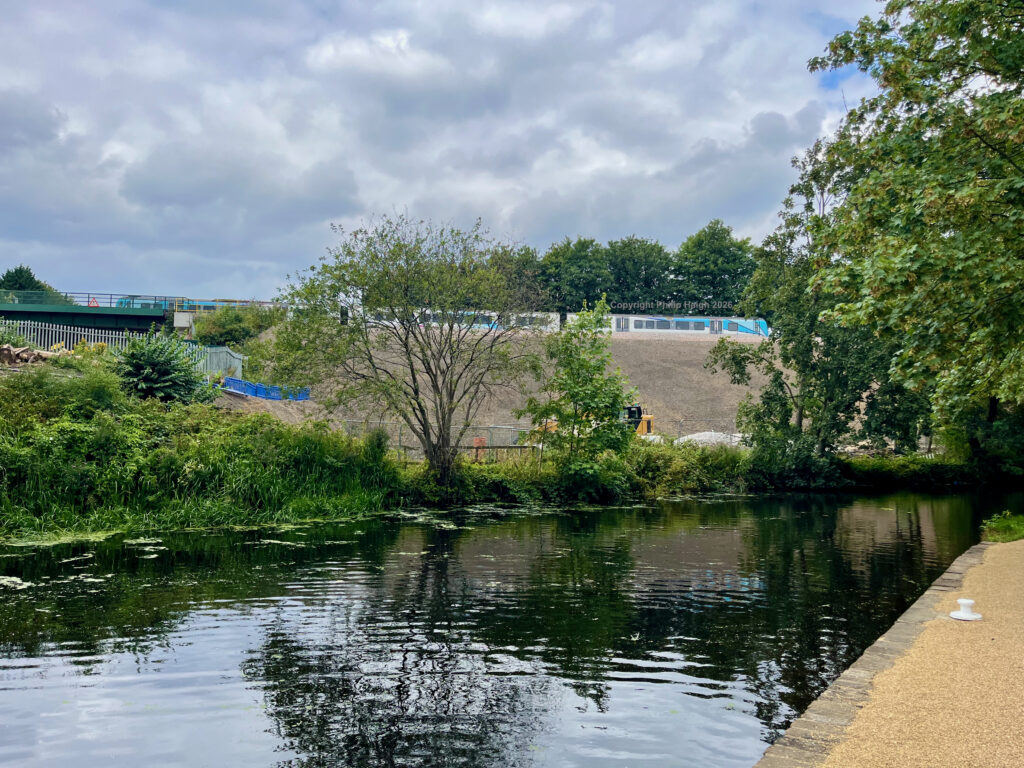
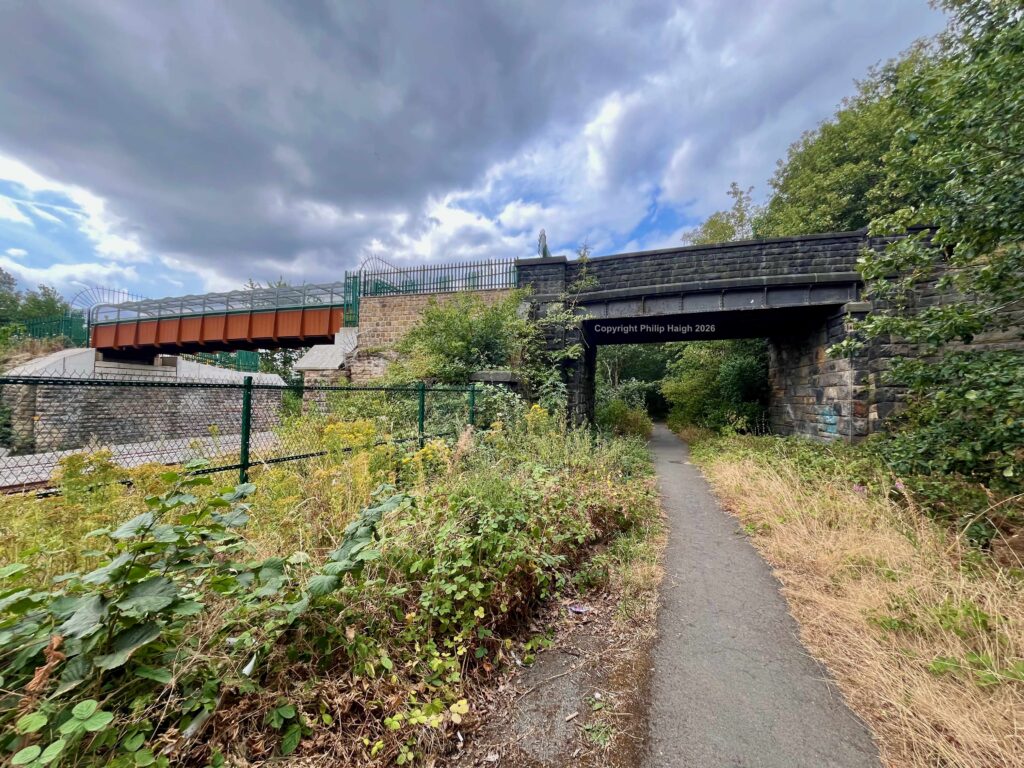
TransPennine Express bi-mode unit 802201 takes the 1024 Liverpool Lime Street-Newcastle under Fieldhouse Bridge near Deighton on July 29 2026. NR has rebuilt the bridge to give enough clearance to string overhead line equipment under it to provide future electric trains with power. It has laid the two future fast lines (the tracks on the left) while the train is running on what will be the eastbound slow line. This view on July 29 2026 looks across Huddersfield Viaduct through the steelwork of the station’s new platform canopies. Eventually the viaduct will carry four tracks (it once had five). The two on the left (seen here) will carry stopping services and will be the Slow Lines. Network Rail has still to lay the other two tracks, the Fast Lines, which will go on the right and carry express services. In the foreground are the edges of Platforms 4 and 5. The green signal allows trains to leave from Platform 3 towards Leeds. Work to build new platforms at Huddersfield station continues on July 29 2027. The footbridge deck with its serrated front spans the gap over to what will be Platforms 5 and 6 on which to recently erected canopy masts stand. Behind the fence in the foreground is the edge of what will be Platform 4. Network Rail’s remodelling here as part of its Transpennine Route Upgrade will give the station four through platforms as well as one bay (Platform 1) facing west for Sheffield trains and one bay facing east (Platform 6) for Bradford, Leeds or Wakefield local services.Huddersfield Viaduct is 606 metres long and has 47 spans. Along its eastern wall, Network Rail is fixing foundation brackets to carry overhead line equipment (OLE). This OLE will supply electrical power to trains. Much of Network Rail’s Transpennine Route Upgrade work remains unseen by passengers. One example is this work to strengthen an embankment by the Huddersfield Broad Canal (previously called Sir John Ramsden’s Canal) close to the rebuilt bridge over Red Doles Road. NR needed both the reinforcement work and the new green bridge deck to allow it to lay two extra tracks as part of work to create a four-track corridor between Ravensthorpe and Huddersfield.This is Fieldhouse Bridge near Deighton. It’s photographed from the old trackbed of the Midland Railway’s branch into Huddersfield which served a goods yard at Newtown. Alongside is Network Rail’s main Leeds-Manchester which the London and North Western Railway opened in 1847. The Midland Railway’s branch ran from Mirfield and opened in 1910. By 1923 both companies were part of the London Midland and Scottish Railway. It opened a connecting junction at Red Doles Junction, just on the other side of this bridge. This let the LMS close the Mirfield section of the line in 1937. The remainder of the route into Newtown closed under British Rail in 1968.