
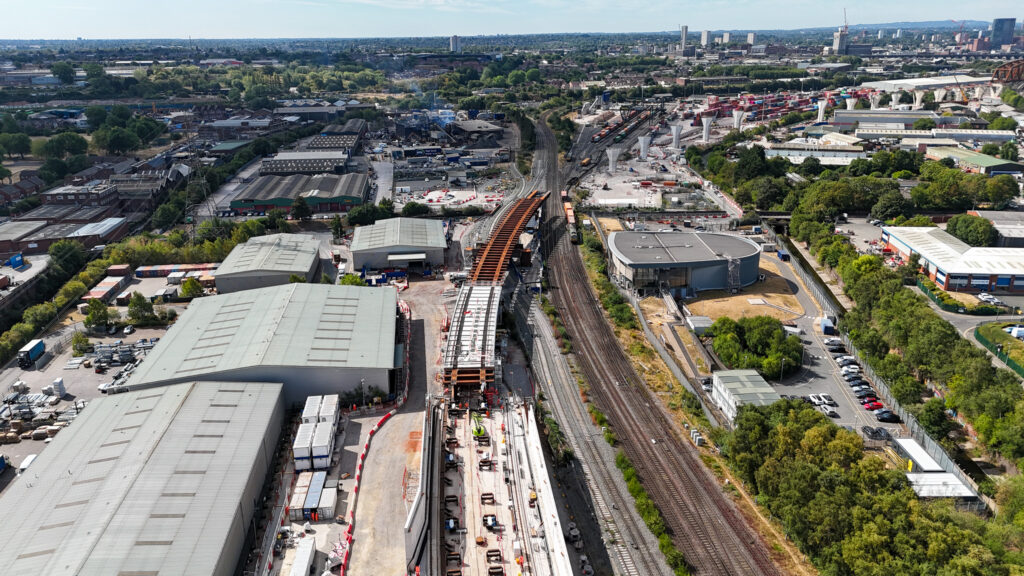
To build it, HS2 assembles each of seven sections towards the bottom of this picture and then pulls the assembly out over NR’s tracks. It then builds the next section and repeats the process for seven spans. Lifting a final seven spans into place by crane (towards the top right) creates the 14-span viaduct.
Preparatory work included realigning two NR tracks; the Down Saltley Goods Loop (leading into EMR’s scrapyard) and Down Derby Goods. This work created an island for HS2 to build its launch ramp. This needed a new bridge over Duddesdon Mill Road. HS2 also built supporting piers that run alongside Freightliner’s Lawley Street terminal, from which a train is emerging.
Alongside EMR’s yard once stood Saltley Locomotive Depot which was famed for the widespread route knowledge of its crews.
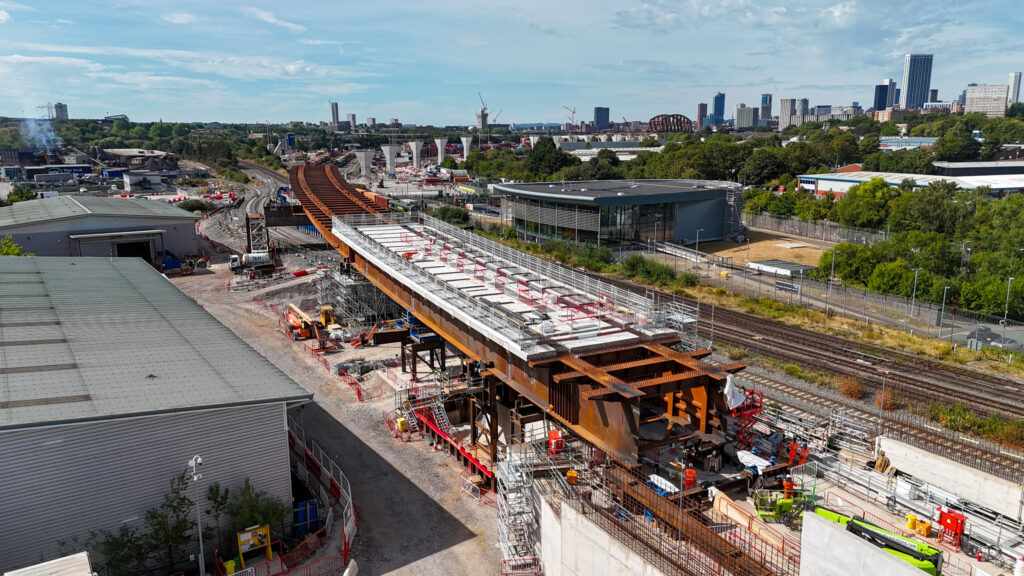
Prominent in the centre is Railtrack’s West Coast Rail Traffic Control Centre. Railtrack planned to install moving block signalling for 140mph running but dropped the idea as undeliverable in 1999. The building now houses NR’s West Midlands Signalling Centre.
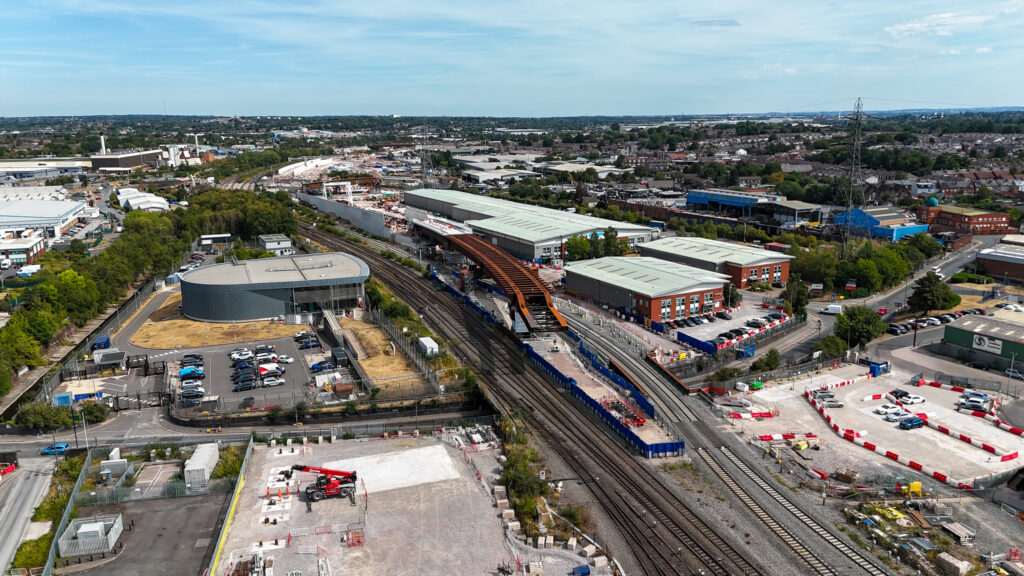
They pass Washwood Heath, where HS2 plans its rolling stock maintenance depot. Washwood Heath was the site of Metropolitan Cammell’s works. Under Alstom ownership, it assembled today’s Class 390 Pendolino EMUs that ply the West Coast Main Line.